Does the Perfect Customer Journey Exist for Small Businesses in Australia?
Disclaimer: This blog post is intended for informational purposes only and does not constitute legal, financial, visa, or medical advice. Please consult with a qualified professional for advice tailored to your specific situation.
The “perfect” customer journey is both a guiding star and a moving target for Australian small businesses—especially for women-led ventures. While perfection may be elusive, striving for excellence, adaptability, and customer-centricity can transform your business and set you apart in a crowded market.

Introduction: The Quest for the Perfect Customer Journey
Imagine this: every customer who discovers your business glides effortlessly from first encounter to loyal advocacy, delighted at every step. No hiccups, no confusion, no missed opportunities—just seamless, memorable experiences that turn browsers into raving fans.
As the owner of an Australian online business management company dedicated to empowering female small business owners, I hear this aspiration every day. In 2026, with 2,814,778 small businesses across Australia and women owning 35% of them, the customer journey is more than a buzzword—it’s the heartbeat of sustainable growth and competitive advantage.
But does the perfect customer journey actually exist for small businesses in Australia? Or is it a myth, a mirage shimmering on the horizon? Let’s explore all sides—YES, NO, and MAYBE—grounded in the latest data, real-world stories, and practical strategies for women-led businesses.
What Is the Customer Journey (and Why Does It Matter)?
Before we debate perfection, let’s clarify what we mean by the “customer journey.”
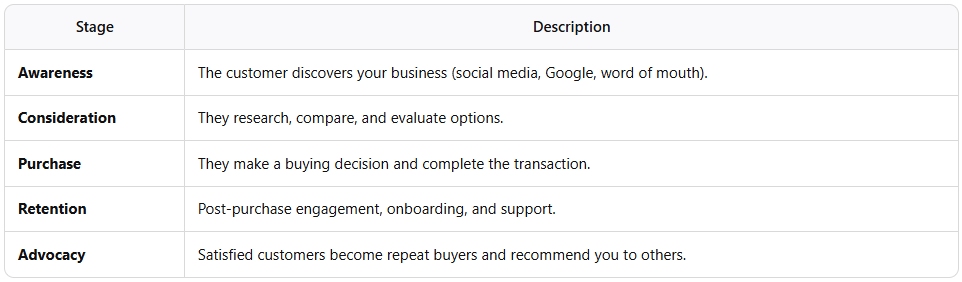
The Five Stages of the Customer Journey
For Australian small businesses, the customer journey typically unfolds in five key stages:
Common Touchpoints
Australian small businesses use a blend of digital and offline touchpoints:
Social media (Facebook, Instagram, LinkedIn)
Google search and SEO content
Online reviews (Google, Trustpilot)
Word-of-mouth referrals
Website and blog
Email newsletters
E-commerce checkout
Live chat or chatbot support
Customer service (phone, email, chat)
Loyalty programs and referral incentives
Why It Matters
Customer expectations are rising: 91% of Australians rate accuracy of information as “high to very high” importance.
Experience gap: 45% of SMBs believe they deliver high service, but only 25% of consumers agree.
Financial impact: The average SME loses an estimated $87,000 per year from negative reviews alone.
Key Finding:
Mapping and managing the customer journey is no longer optional—it’s essential for survival and growth in 2026.
The Case for YES: The Perfect Customer Journey Can Exist
Let’s start with optimism. Is it possible to create a flawless customer journey as a small business in Australia?
1. Technology Levels the Playing Field
Digital tools are more accessible than ever: Platforms like Canva, Miro, HubSpot, and Thryv offer affordable, user-friendly customer journey mapping and management tools.
Automation and AI: Automated emails, chatbots, and CRM systems help even solo operators deliver consistent, personalised experiences.
2. Customer-Centric Mindset
Personalisation at scale: Small businesses can know their customers by name, remember preferences, and tailor communications—something big brands struggle to do authentically.
Agility: Small teams can pivot quickly, respond to feedback, and fix issues in real time.
3. Success Stories Prove It’s Possible
Honeybomb Strategy: Founder Renata Freund credits mentorship and networking for shortcutting the trial-and-error process, leading to a customer journey that delights and retains clients.
Slendier: Erica, the founder, expanded globally by focusing on confidence, mentorship, and self-care—building a journey that resonates with health-conscious customers.
4. Frameworks and Best Practices
Visual journey maps: Outline customer actions, emotions, and pain points at each stage.
Persona-based mapping: Tailor journeys to real customer segments using data and feedback.
Regular updates: Quarterly reviews keep the journey aligned with evolving expectations.
5. Community and Support
Mentorship and advisory networks: Female business owners thrive when supported by mentors and communities that understand their unique journeys.
YES, it’s possible:
With the right mindset, tools, and support, small businesses—especially those led by women—can craft customer journeys that feel perfect to their ideal clients.
Have you checked out all the new tools, guides and checklists in our Resource Hub? Explore and download now!
The Case for NO: The Perfect Customer Journey Does Not Exist
Now, let’s get real. What stands in the way of perfection?
1. Resource Constraints Are Real
Time and workload: Many female business owners work over 50 hours a week, often without access to maternity leave or sick pay.
Financial limitations: 75% of small business owners earn less than the average Australian wage, and 43% are making zero profit.
Staffing issues: High turnover and the challenge of hiring the right people disrupt consistency.
2. Digital Literacy and Technology Gaps
39% of SMEs fail to grasp tech opportunities; 31% struggle to keep up with tech changes.
Limited online presence: 37% of SMEs lack any online presence; in rural areas, it’s 51%.
Reluctance to upgrade: 70% of businesses prioritise other matters over tech, and 60% use the same solutions since starting.
3. Inconsistent Customer Experiences
Wearing too many hats: Owners juggle marketing, sales, service, and admin, leading to dropped balls and inconsistent touchpoints.
Lack of strategy: Many businesses lack a clear digital transformation or customer experience strategy.
4. Competition and Customer Expectations
Resource disparity: Competing with larger businesses that have bigger budgets for marketing and tech is tough.
Rising expectations: Customers expect seamless, omnichannel experiences—hard to deliver without significant investment.
5. Female-Specific Barriers
Access to capital: 43% of women-led businesses cite this as a central barrier.
Gendered perceptions: Female founders face bias, imposter syndrome (16.4% vs 5.8% for men), and dual responsibilities of business and caregiving.
6. The Human Factor
Perfection is subjective: What feels perfect to one customer may not to another.
Unpredictable variables: Staff illness, tech outages, supply chain hiccups, and changing regulations can derail even the best-laid plans.
NO, it’s not possible:
The perfect customer journey is an ideal, not a reality—especially given the resource, technology, and human challenges facing small businesses in Australia.
The Case for MAYBE: The Middle Ground
So, is the perfect customer journey a myth or a possibility? The truth, as always, is nuanced.
1. Perfection Is a Moving Target
Customer needs evolve: What delights today may be expected tomorrow.
Business growth brings complexity: As you scale, new touchpoints and challenges emerge.
2. “Perfect” Is in the Eye of the Beholder
Focus on your ideal customer: Perfection means different things to different segments. Map journeys for your best-fit clients, not everyone.
Continuous improvement: Treat the journey as a living document—review, adapt, and iterate.
3. Progress Over Perfection
Aim for excellence, not flawlessness: Small improvements in key touchpoints can have outsized impacts on satisfaction and loyalty.
Celebrate wins: Every delighted customer, every glowing review, is a step toward your version of perfect.
4. Leverage Community and Support
Mentorship, networking, and peer learning: These are critical for overcoming barriers and sharing what works.
5. Practical Tools Make It Achievable
Start simple: Use free or low-cost tools (Canva, Miro, Google Forms) to map and measure your journey.
Automate where possible: Even basic automation (welcome emails, feedback requests) can boost consistency.
MAYBE, it depends:
The perfect customer journey is less about flawlessness and more about intentional, customer-centric progress—tailored to your resources, values, and community.
Practical Steps: How to Move Toward Your “Perfect” Customer Journey
Ready to take action? Here’s a roadmap for female small business owners in Australia:
1. Map Your Current Customer Journey
List all touchpoints: From first discovery to post-purchase follow-up.
Identify pain points: Where do customers drop off or get frustrated?
Gather feedback: Use surveys, reviews, and direct conversations.
2. Define Your Ideal Customer
Create personas: Who are your best-fit clients? What do they value?
Tailor the journey: Focus on delighting your ideal customer, not everyone.
3. Prioritise Key Touchpoints
Focus on moments that matter: First impressions, purchase experience, and post-sale support.
Automate where possible: Welcome emails, order confirmations, feedback requests.
4. Invest in Digital Skills and Tools
Upskill yourself and your team: Free online courses, webinars, and micro-credentials.
Adopt simple tech: CRM systems, social media schedulers, and website builders.
5. Build a Support Network
Mentorship: Seek out mentors who understand your journey.
Peer learning: Join local business groups, online forums, and women’s networks.
6. Measure and Iterate
Track key metrics: Customer satisfaction, retention rates, and review scores.
Review quarterly: Update your journey map based on feedback and results.
7. Celebrate Progress
Share wins: Highlight positive reviews and customer stories.
Acknowledge challenges: Be transparent with your team and customers when things go wrong—and show how you’re improving.
Real-World Examples: Australian Female Entrepreneurs Leading the Way
Honeybomb Strategy
Mentorship and networking: Founder Renata Freund leveraged her network to shortcut the trial-and-error process, creating a customer journey that delights and retains clients.
Slendier
Strategic growth: Erica expanded her business globally by focusing on confidence, mentorship, and self-care—building a journey that resonates with health-conscious customers.
Digital Transformation Case Studies
Home Harmony, I AM Styled, Northside Flower Market, Social Ocean: These businesses adopted digital tools to improve customer engagement and streamline operations, often citing the value of community and targeted advisory services.
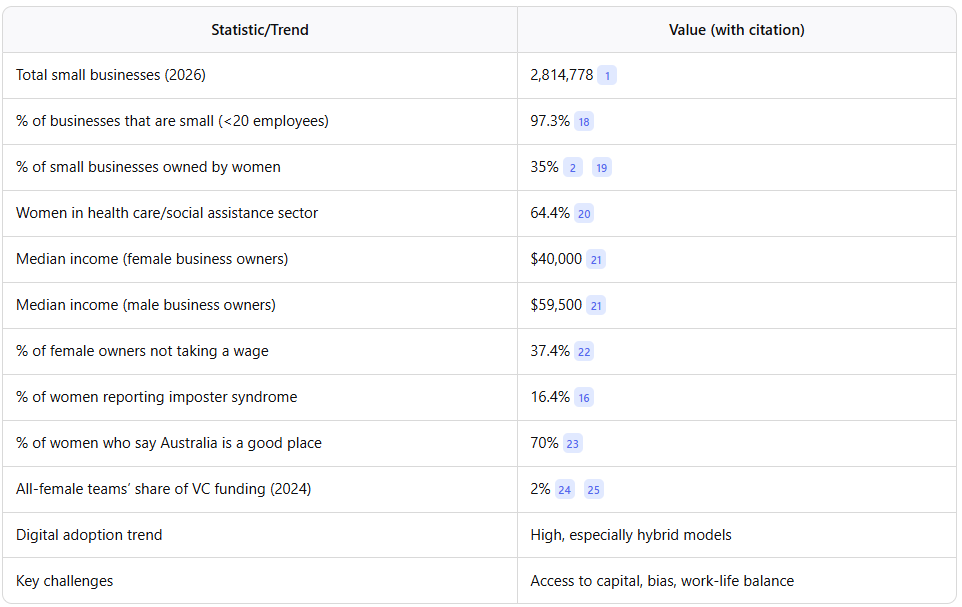
Data-Driven Insights: The Australian Small Business Landscape (2025–2026)
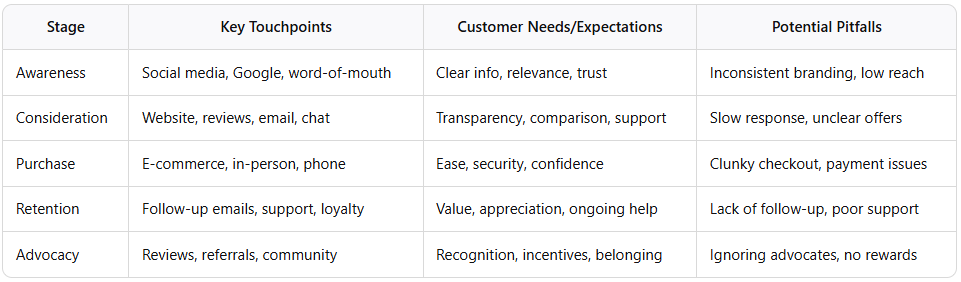
Visualising the Customer Journey
Below is a simplified customer journey map for a typical Australian female-led small business:
Overcoming Barriers: Special Considerations for Female Small Business Owners
1. Access to Capital
Seek out grants and programs: Government initiatives like the Working for Women Program and state-based funding can help bridge the gap.
2. Balancing Responsibilities
Flexible business models: Digital-first and hybrid models allow for better work-life integration.
3. Combatting Bias and Imposter Syndrome
Community support: Join women’s business networks and mentorship programs.
Celebrate diversity: Share your unique journey and encourage others.
4. Digital Literacy
Invest in learning: Free and low-cost courses can boost your confidence and skills.
The Future: Trends Shaping the Customer Journey in 2026
Hyper-personalisation: AI and data analytics enable tailored experiences at scale.
Omnichannel integration: Customers expect seamless transitions between online and offline touchpoints.
Community-driven brands: Customers value brands that foster belonging and shared values.
Continuous feedback loops: Real-time feedback and rapid iteration are the new normal.

Conclusion: Striving for Progress, Not Perfection
So, does the perfect customer journey exist for small businesses in Australia?
YES: With the right tools, mindset, and support, you can create journeys that feel perfect for your ideal customers.
NO: Perfection is elusive—resource constraints, technology gaps, and human factors make it impossible to please everyone, all the time.
MAYBE: The real magic lies in the pursuit—striving for excellence, learning from feedback, and adapting as you grow.
Final Word:
As a female small business owner in Australia, your journey is unique, valuable, and worthy of celebration. The “perfect” customer journey may be a moving target, but every step you take toward understanding, delighting, and empowering your customers brings you closer to your own version of perfection.
Keep mapping, keep improving, and remember: progress is the new perfect.
Further Resources
You’ve got this. Your customers—and your business—are worth the journey.
Ready to take your business knowledge to the next level? Book a strategy session with me, join our community of female founders.
There are many ways of working with professionals. Start small, but keep it regularly and don’t wait until something happens. Strategic planning and periodic reviews are a great start to implement those strategies.
Perfectly Organised NT can assist with a financial review and strategic business planning & management. Find out more!

Perfectly Organised NT - helping small business owners in Australia manage their business.