Disclaimer: This blog post is intended for informational purposes only and does not constitute legal, financial, visa, or medical advice. Please consult with a qualified professional for advice tailored to your specific situation.
Social media offers powerful opportunities for female-led small businesses in Australia—but it’s not a one-size-fits-all solution. The right strategy is intentional, sustainable, and tailored to your business, your audience, and your personal capacity.

Introduction: The Social Media Pressure Cooker
If you’re a female small business owner in Australia in 2026, you’ve probably felt it: the relentless pressure to “be on social media.”
Everywhere you turn—business podcasts, networking events, even your competitors’ Instagram feeds—the message is clear:
If you’re not posting, you’re invisible.
But is that really true? And more importantly, is social media the right strategy for your business?
As the founder of an online business management company dedicated to helping Australian women like you manage, grow, and plan strategically, I’ve seen firsthand both the magic and the mayhem that social media can bring.
Let’s cut through the noise, look at the real data, and help you make a decision that’s right for you, your business, and your wellbeing.
The 2026 Australian Social Media Landscape: The Numbers You Need to Know
Before we dive into strategy, let’s ground ourselves in the facts. Social media in Australia is not just big—it’s massive.
Social Media by the Numbers
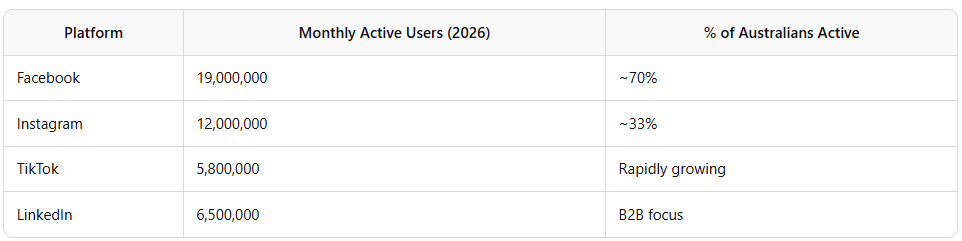
77.7% of Australians are active on social media—that’s over three-quarters of the population.
Facebook remains the dominant platform, but Instagram and TikTok are surging, especially among younger demographics.
LinkedIn is the go-to for professional networking and B2B services.
Key Insight:
Your customers are on social media. The question is: which platform, and how do they use it?
The Power of Female-Led Small Businesses in Australia
Let’s celebrate the impact you’re making:
~900,000 Australian small businesses are female-owned or female-led—that’s about one in three.
Most operate in health care, education, retail, professional services, and accommodation.
Female entrepreneurs are leading the way in digital adoption, community building, and authentic marketing.
But you’re also facing unique challenges: rising costs, access to capital, compliance headaches, and—let’s be honest—burnout.
The Genuine Benefits of Social Media for Female-Led Businesses
Social media isn’t just about pretty pictures or viral dances. When used strategically, it can be a game-changer for female small business owners.
1. Lead Generation & Sales
Businesses using social media generate twice as many leads as those who don’t.
Social media marketing has a 100% higher lead-to-close rate than outbound methods like cold calling.
Facebook ads reach 82% of Australian adults; Instagram ads reach 57% of the total population.
TikTok converts 43.8% of users into buyers—the highest conversion rate among major platforms.
2. Engagement & Community
Social media is a two-way street: it’s not just about broadcasting, but building relationships.
Female entrepreneurs’ natural strengths—authentic storytelling, community building, and relationship marketing—align perfectly with what performs best on social media.
3. Content That Works
Short-form videos (think Instagram Reels, TikTok) are the top ROI driver for 71% of video marketers.
Visual branding and educational content help female-led businesses stand out and build trust.
4. Cost-Effectiveness
Even small budgets can make an impact: 24% of small businesses spend less than $500/month on social media marketing, and a recommended starting budget is AU$500–AU$2,000/month.
Key Finding:
Social media, when used intentionally, can level the playing field for female small business owners—helping you reach, engage, and convert your ideal customers.
Have you checked out all the new tools, guides and checklists in our Resource Hub? Explore and download now!
The Real Challenges: What’s Holding Us Back?
Let’s get real. Social media is not all sunshine and sales.
Here are the pain points I hear from clients every week:
1. Declining Organic Reach
Organic reach on Facebook is now just 2–5% of your followers.
Algorithm changes mean you’re often “paying to play”—even to reach your own audience.
2. Content Creation Burnout
70% of marketers lack a consistent strategy, leading to content burnout.
The pressure to be “always on” is real: 22% of consumers expect instant responses, and 37% expect a reply within 30 minutes.
76% of small business owners report stress and anxiety; 57% experience burnout.
3. Algorithm Uncertainty
Platforms change the rules constantly. What worked last month might flop today.
Early adoption of new features is often rewarded, but keeping up can feel impossible.
4. Measuring ROI
Over 70% of marketers cite measuring ROI as their biggest challenge.
Paid campaigns are easier to track, but organic efforts (brand building, engagement) are harder to quantify.
5. Resource Intensity
Effective social media marketing requires ongoing investment in time, creativity, and sometimes external expertise.
Many female business owners are already stretched thin—adding another “must-do” can tip the balance toward overwhelm.
Key Takeaway:
Social media can be a double-edged sword. The benefits are real, but so are the risks—especially to your time, energy, and mental health.
Is Social Media the Right Fit for Your Business? (A Self-Audit Framework)
Not every business needs to be on every platform—or even on social media at all.
Here’s how to decide if it’s right for you:
1. Who Is Your Target Audience?
Are your ideal customers active on social media? Which platforms do they use?
For example, if you’re targeting Gen Z, TikTok and Instagram are essential. For B2B or professional services, LinkedIn is more effective.
2. What Is Your Industry?
Visual/product-based businesses (retail, beauty, food) thrive on Instagram and Facebook.
Service-based or B2B businesses may see better results on LinkedIn or through content marketing and SEO.
3. What Are Your Goals?
Are you looking to build brand awareness, generate leads, drive sales, or foster community?
Social media excels at engagement and discovery, but may not be the best for direct sales in every industry.
4. What Is Your Capacity?
Do you have the time, skills, or budget to create consistent, high-quality content?
Can you respond to messages and comments promptly?
If not, can you outsource or automate some tasks?
5. What Are Your Strengths?
Are you comfortable on camera? Do you enjoy writing or creating visuals?
Lean into platforms and content types that play to your strengths.
6. What Are Your Alternatives?
Could you achieve your goals more effectively through email marketing, SEO, Google Business Profile, or networking?
Self-Assessment Table: Should You Invest in Social Media?
Are my customers active on social media?
Do I have time/resources for consistent posts?
Is my industry visual or community-driven?
Am I comfortable with video/content creation?
Can I handle the “always-on” expectations?
Do I have a clear strategy and goals?
If you have more “Yes” than “No,” social media could be a strong fit. If not, consider focusing your energy elsewhere—or start small and scale up as you gain confidence.
Platform-Specific Guidance: Where Should You Show Up?
Not all platforms are created equal.
Here’s how to choose the right one(s) for your business:
Facebook: The Community Connector
Best for: Local businesses, community building, events, groups.
Strengths: Massive reach (19 million users), robust advertising tools, Facebook Groups for niche communities.
Tips: Use for building relationships, sharing updates, and running targeted ads.
Instagram: The Visual Storyteller
Best for: Product-based businesses, lifestyle brands, creatives.
Strengths: Visual storytelling, shoppable posts, Reels for short-form video.
Tips: Invest in high-quality visuals, leverage Stories and Reels, collaborate with influencers.
TikTok: The Discovery Engine
Best for: Brands targeting younger audiences, creative or trend-driven businesses.
Strengths: Viral potential, algorithm favors small accounts, high conversion rates.
Tips: Embrace authenticity, experiment with trends, keep videos short and engaging.
LinkedIn: The Professional Powerhouse
Best for: B2B, professional services, consultants, coaches.
Strengths: Networking, thought leadership, lead generation.
Tips: Share expertise, publish articles, engage in industry groups.
Pro Tip:
Focus on 1–2 platforms where your audience is most active and where you can show up consistently. Quality beats quantity every time.
Smart Social Media Strategies for 2026
Success on social media isn’t about doing more—it’s about doing what matters, strategically.
1. Document Your Strategy
Businesses with a documented social media strategy are 313% more likely to report success.
Define your goals, target audience, content pillars, posting schedule, and metrics for success.
2. Combine Organic and Paid Efforts
Businesses report 20–40% cost reductions when combining organic and paid strategies.
Use organic content to build trust and community; use paid ads to accelerate reach and conversions.
3. Leverage AI and Automation
AI usage among social marketers is up 180%—tools can help with content ideas, scheduling, analytics, and even customer service.
Free up your time for high-impact activities.
4. Budget Wisely
Recommended starting budget: AU$500–AU$2,000/month.
Start small, test what works, and scale up as you see results.
5. Prioritize Short-Form Video
Short-form video is the top ROI driver—don’t be afraid to experiment with Reels, TikTok, or YouTube Shorts.
6. Collaborate and Build Community
Partner with other female entrepreneurs, micro-influencers, or local creators to expand your reach and credibility.
Alternatives and Complements to Social Media
Social media is powerful, but it’s not the only tool in your marketing toolkit.
Here’s how to diversify:
1. Email Marketing
High ROI, direct communication, and ownership of your audience.
Use email to nurture leads, drive repeat business, and share exclusive offers.
2. SEO (Search Engine Optimization)
Australian businesses are spending $1.5 billion on SEO in 2025, up 12%.
Invest in your website, blog, and Google rankings for long-term visibility.
3. Google Business Profile
Essential for local businesses—helps you appear in search results and Google Maps.
Keep your profile updated with hours, photos, and reviews.
4. Word-of-Mouth and Networking
Still one of the most powerful marketing channels, especially in local and niche markets.
Attend events, join business groups, and encourage referrals.
5. Influencer and Micro-Influencer Partnerships
Influencer ad spend in Australia reached $590 million USD, growing 13.5%.
Collaborate with creators who align with your brand values and audience.
Building a Sustainable, Strategic Approach (Not a Reactive One)
The most successful female business owners I work with don’t chase every trend—they build a strategy that fits their business and their life.
1. Self-Assessment Framework
Audit your goals, audience, resources, and strengths (see earlier table).
Decide where social media fits in your overall marketing mix.
2. Set Boundaries
Choose your platforms and posting frequency based on what’s sustainable for you.
Use scheduling tools and automation to protect your time.
3. Measure What Matters
Track metrics that align with your goals: engagement, leads, sales, website traffic.
Don’t get distracted by vanity metrics (likes, followers) if they don’t drive results.
4. Prioritize Wellbeing
Recognize the signs of burnout and take breaks when needed.
Remember: You are not your business’s social media account.
5. Stay Curious, Not Reactive
Keep learning about new features and trends, but don’t feel pressured to jump on every bandwagon.
Test, measure, and iterate—what works for others may not work for you.
Case Studies: Real Women, Real Results
Go-To Skincare
Built a large audience through simple, helpful content that fits everyday user habits.
Leveraged both organic and paid social media campaigns for growth.
Brisbane Café
Spends AU$300 monthly on Facebook ads, resulting in a 20% uplift in foot traffic.
Sydney Tech Firm
Invests AU$8,000 on LinkedIn for 150 qualified leads, demonstrating the effectiveness of targeted B2B campaigns.
Businesses Thriving Without Social Media
Some focus on SEO, email marketing, and Google Business Profile for lead generation and customer retention—especially in industries where personal referrals and local reputation are paramount.

Conclusion: Your Business, Your Rules
You are not behind. You are not failing. You are not invisible if you’re not on every platform.
Social media is a powerful tool—but it’s just that: a tool. The right strategy is the one that aligns with your business goals, your audience, and your personal capacity.
If you love connecting with your community, enjoy creating content, and your customers are active on social media—go for it!
If you feel overwhelmed, burned out, or your audience isn’t there—give yourself permission to focus elsewhere.
The most strategic thing you can do is to make intentional, data-backed decisions that serve your business and your wellbeing.
Action Steps
Audit your business: Use the self-assessment framework to decide if social media is right for you.
Choose your platforms: Focus on 1–2 where your audience is most active.
Document your strategy: Set clear goals, content pillars, and metrics.
Diversify your marketing: Don’t put all your eggs in the social media basket—explore email, SEO, Google Business Profile, and networking.
Prioritize sustainability: Protect your time, energy, and mental health.
You are the CEO of your business—and your marketing strategy. Choose what works for you, and let go of the rest.
There are many ways of working with professionals. Start small, but keep it regularly and don’t wait until something happens. Strategic planning and periodic reviews are a great start to implement those strategies.
Perfectly Organised NT can assist with a financial review and strategic business planning & management. Find out more!

Perfectly Organised NT - helping small business owners in Australia manage their business.