Implement Cybersecurity into Your Small Business in Australia: 5 Practical Tips for Female Entrepreneurs
Disclaimer: This blog post is intended for informational purposes only and does not constitute legal, financial, or medical advice. Please consult with a qualified professional for advice tailored to your specific situation.
Cybersecurity is no longer optional for Australian small businesses—especially for female entrepreneurs who are building their dreams in a digital world. With simple, budget-friendly steps and the right tools, you can protect your business, your customers, and your peace of mind.
As the owner of an Australian online business management consultancy, I’ve seen firsthand how digital transformation has empowered women to launch and grow their own businesses. But with opportunity comes risk: cybercrime is on the rise, and small businesses—especially those without IT teams—are prime targets.
Did you know?
Up to 72% of Australian small businesses experienced a cyber attack in the past year.
The average cost of a cyber incident for a small business is between $55,000 and $122,000.
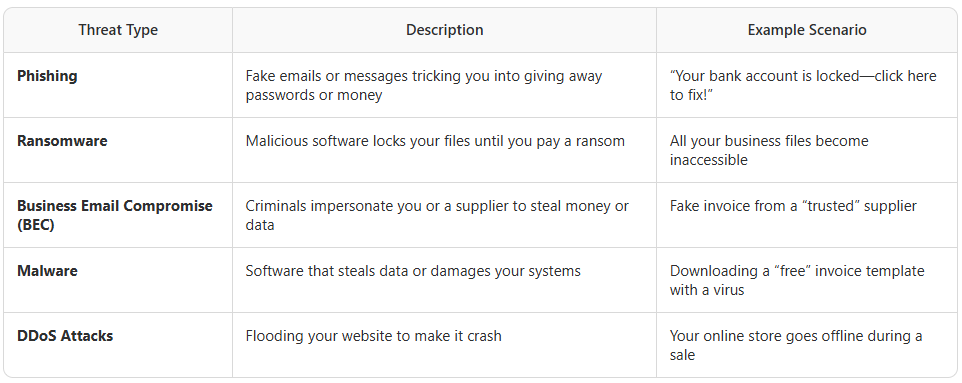
Phishing, ransomware, and business email compromise are the most common threats.
Key Finding:
Cybersecurity is not just for big corporations. It’s essential for every small business owner who wants to protect her livelihood, reputation, and customers.

2. What Is Cybersecurity? How Does It Work?
Cybersecurityis the practice of protecting your business’s digital assets—like computers, networks, data, and online accounts—from theft, damage, or unauthorized access. Think of it as locking the doors and windows of your digital shopfront.
How Cybersecurity Works
Prevention: Using tools and practices to stop cybercriminals from getting in (e.g., strong passwords, antivirus software).
Detection: Spotting suspicious activity quickly (e.g., email alerts, monitoring tools).
Response: Acting fast if something goes wrong (e.g., restoring backups, changing passwords).
Recovery: Getting your business back on track after an incident.
Analogy:
Just as you wouldn’t leave your physical shop unlocked overnight, you shouldn’t leave your digital business unprotected.
3. The Australian Cyber Threat Landscape: What You Need to Know
The Top 5 Cyber Threats Facing Small Businesses
The Numbers
72% of small businesses faced at least one cyber attack in the past year.
Average loss per incident: $55,000–$122,000.
66% of small businesses say cost is the biggest barrier to better security.
Key Takeaway:
Cyber attacks are not rare—they’re the new normal. But with the right steps, you can dramatically reduce your risk.
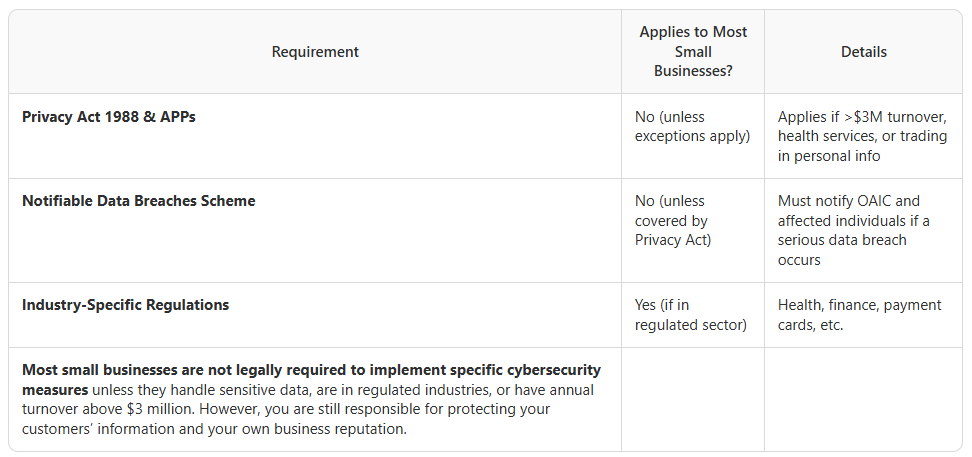
4. Legal Requirements vs. Best Practice: What’s Mandatory and What’s Optional?
What’s Mandatory for Most Small Businesses?
What’s Optional (But Strongly Recommended)?
Following the Australian Signals Directorate’s Essential Eight (a set of best-practice security strategies)
Regular staff training on cyber risks
Using password managers and multi-factor authentication
Regular data backups and software updates
Pro Tip:
Even if you’re not legally required, following best practices can save you from costly incidents and build trust with your customers.
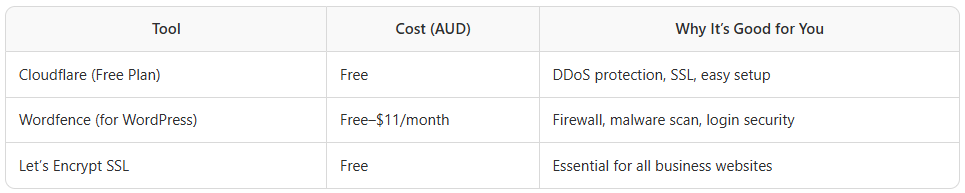
5. Budget-Friendly Cybersecurity: Tools and Solutions for Small Businesses
You don’t need a big IT budget to get strong protection. Here are affordable, user-friendly tools you can implement yourself:
Antivirus & Endpoint Protection

Backup Solutions

Password Managers

Two-Factor Authentication (2FA)

Email Security

Website Security
Key Finding:
You can build a strong cybersecurity foundation for under $100/month per user—often much less if you leverage free tools.
6. Step-by-Step Cybersecurity Implementation Guide (DIY-Friendly!)
Let’s break down cybersecurity into simple, actionable steps you can take—no IT degree required!
Step 1: Assess Your Current Security
Use the Australian Cyber Security Centre’s free Cyber Health Check Tool to identify your strengths and gaps.
Make a list of all your digital assets: computers, phones, cloud accounts, website, etc.
Step 2: Secure Your Passwords
Adopt a password manager (e.g., Bitwarden, Keeper) to generate and store strong, unique passwords for every account.
Set password guidelines: At least 12 characters, no personal info, change immediately if breached.
Enable multi-factor authentication (MFA) on all important accounts (email, banking, cloud services).
Step 3: Keep Software and Devices Updated
Enable automatic updates for your operating system, apps, and security software.
Install reputable antivirus software on all devices.
Step 4: Back Up Your Data
Automate backups using cloud services (Google Drive, OneDrive) or external drives.
Store at least one backup offsite or in the cloud.
Test your backups monthly to ensure you can restore files if needed.
Step 5: Secure Your Email
Activate spam and phishing filters in your email settings.
Train yourself and your team to spot suspicious emails—double-check sender addresses, don’t click unknown links.
Use strong, unique passwords and MFA for all email accounts.
Step 6: Train Your Team
Onboard new staff with a short cybersecurity briefing.
Use free online training modules (e.g., Cyber Wardens) for regular refreshers.
Simulate phishing by sending test emails to reinforce training.
Step 7: Control Access
Apply the principle of least privilege: Only give staff access to what they need.
Regularly review user accounts and remove access for former employees.
Step 8: Secure Your Devices and Network
Physically secure devices and lock screens when not in use.
Use strong Wi-Fi passwords and change default router credentials.
Set up a guest Wi-Fi network for visitors.
Use a VPN when working remotely, especially on public Wi-Fi.
Step 9: Protect Sensitive Data
Encrypt sensitive files using built-in tools or cloud storage encryption.
Understand your privacy obligations under the Australian Privacy Principles.
Step 10: Create an Incident Response Plan
Document a simple plan: Who to contact, steps to isolate affected systems, how to notify customers.
Assign roles for each step.
Practice the plan with your team annually.
7. Government Support and Free Resources
You’re not alone! The Australian government offers a wealth of free resources and support for small businesses:

Pro Tip:
Sign up for alerts from the ACSC to stay informed about the latest threats and scams.
8. Building a Cyber-Resilient Culture: Training and Ongoing Awareness
Cybersecurity isn’t a one-off project—it’s a mindset. Here’s how to make it part of your business DNA:
Regularly update your team on new threats and safe practices.
Encourage a “see something, say something” culture—no question is too small.
Celebrate cyber wins (e.g., catching a phishing email) to reinforce good habits.
Review your policies and plans at least once a year.
Key Takeaway:
Your people are your first line of defense. Empower them with knowledge and confidence.
9. Incident Response: What to Do If You’re Attacked
Even with the best defenses, incidents can happen.
Here’s your action plan:
Stay Calm and Isolate the Problem
Disconnect affected devices from the internet.
Don’t pay ransoms or respond to suspicious requests.
Change Passwords
Immediately update passwords for affected accounts.
Contact Support
Call the ACSC 24/7 hotline (1300 CYBER1) for guidance.
Notify your bank if financial information is at risk.
Notify Affected Parties
If customer data is involved, inform them promptly and transparently.
Report the Incident
Use the ACSC’s ReportCyber platform.
Restore from Backups
Only after you’re sure the threat is removed.
Review and Learn
Update your incident response plan based on what happened.

Your Next Steps to a Safer Business
Summary Box:
Cybersecurity is a journey, not a destination. By taking simple, affordable steps, you can protect your business, your customers, and your future.
Your Action Checklist
Assess your current security with the ACSC Cyber Health Check Tool
Set up a password manager and enable MFA
Automate software updates and data backups
Train your team and create an incident response plan
Leverage free government resources and stay informed
Remember: You don’t need to be a tech expert to keep your business safe. Start small, build good habits, and reach out for help when you need it.
Final Thought:
As female entrepreneurs, we’re used to wearing many hats. With a little knowledge and the right tools, cybersecurity can be one of them—empowering you to grow your business with confidence in the digital age.
Further Reading & Resources
If you’d like personalised support in developing your strategic plan or managing your business, feel free to reach out. Let’s work together to turn your goals into reality!
There are many ways of working with professionals. Start small, but keep it regularly and don’t wait until something happens. Strategic planning and periodic reviews are a great start to implement those strategies.
Perfectly Organised NT can assist with a financial review and strategic business planning & management. Find out more!

Perfectly Organised NT - helping small business owners in Australia manage their business.