Offering an Apprenticeship as a Small Business in Australia: A 2026 Guide for Female Entrepreneurs
Disclaimer: This blog post is intended for informational purposes only and does not constitute legal, financial, visa, or medical advice. Please consult with a qualified professional for advice tailored to your specific situation.
Apprenticeships are a powerful way for female-led small businesses in Australia to grow talent, access government support, and contribute to a more skilled, diverse workforce. With the right knowledge and planning, offering an apprenticeship can be a rewarding and strategic move for your business in 2026.

Introduction: Why Apprenticeships Matter for Small Businesses in 2026
Hello, inspiring businesswomen!
As a fellow female entrepreneur and business management specialist, I know firsthand the unique challenges and opportunities we face in the Australian small business landscape. In 2026, the world of work is evolving rapidly—skills shortages, digital transformation, and the push for greater diversity are reshaping how we build our teams and grow our businesses.
One of the most strategic moves you can make right now?
Offering an apprenticeship.
Apprenticeships aren’t just for big companies or traditional trades—they’re a dynamic, government-supported pathway for small businesses to nurture new talent, inject fresh ideas, and future-proof your operations. Whether you run a boutique marketing agency, a tech startup, a creative studio, or a local service business, apprenticeships can help you build a loyal, skilled team while accessing generous financial incentives.
In this comprehensive guide, I’ll walk you through everything you need to know about offering an apprenticeship as a small business in Australia in 2026—tailored especially for female business owners. We’ll cover the framework, step-by-step processes, financial support, compliance essentials, and practical tips to set you up for success.
Understanding the Australian Apprenticeship & Traineeship Framework
Before you dive in, it’s crucial to understand how apprenticeships work in Australia today. The system is robust, flexible, and designed to support both employers and apprentices.
What Is an Apprenticeship?
An apprenticeship is a formal training arrangement that combines paid work with structured learning, leading to a nationally recognised qualification. Apprenticeships are available in both traditional trades (like carpentry or hairdressing) and non-trade areas (like business administration, digital marketing, or IT).
Key Features:
Earn and Learn: Apprentices work in your business while studying with a Registered Training Organisation (RTO).
Nationally Recognised: On completion, apprentices receive a qualification that’s recognised across Australia.
Flexible Entry: Open to school-leavers, career changers, and even existing employees.
Types of Apprenticeships

The Key Players
Registered Training Organisations (RTOs): Deliver the formal training component (e.g., TAFE, private colleges).
Apprentice Connect Australia Providers: Support employers and apprentices with recruitment, paperwork, and ongoing advice.
State/Territory Training Authorities: Oversee registration, compliance, and funding at the state level.
Group Training Organisations (GTOs): Employ apprentices and place them with host businesses (great for sharing admin load).
The Training Contract
Every apprenticeship is underpinned by a Training Contract—a legally binding agreement between you (the employer), the apprentice, and the state/territory authority. It outlines:
The qualification to be achieved
The RTO delivering training
Rights and obligations of both parties
Duration and structure of the apprenticeship
Have you checked out all the new tools, guides and checklists in our Resource Hub? Explore and download now!
Step-by-Step Guide: How to Hire and Manage an Apprentice in 2026
Let’s break down the process into actionable steps, so you can move forward with confidence.
1. Assess Your Business Needs
Identify Skills Gaps: What roles or skills are you struggling to fill? Could an apprentice help you grow or free up your time?
Decide on the Role: Is it a trade or non-trade position? Full-time, part-time, or school-based?
Check Readiness: Do you have the capacity to supervise and mentor someone new?
2. Find and Recruit an Apprentice
Advertise the Role: Use job boards, your website, social media, or local networks.
Contact an Apprentice Connect Australia Provider: They can help you find candidates and guide you through the process.
Consider a Group Training Organisation (GTO): They handle recruitment and admin, and you host the apprentice.
3. Select the Right Candidate
Interview for Fit: Look for motivation, willingness to learn, and alignment with your business values.
Check Eligibility: Anyone old enough to work can be an apprentice. School-based apprenticeships are available for students.
Reference Checks: Always verify previous experience and suitability.
4. Choose a Qualification and RTO
Select a Qualification: Work with your Apprentice Connect Provider to choose a course that matches your business needs.
Pick an RTO: Choose a TAFE or private college that offers the qualification and suits your location and schedule.
Develop a Training Plan: Collaborate with the RTO and apprentice to map out on-the-job and off-the-job training.
5. Sign and Register the Training Contract
Complete the Contract: This formalises the arrangement and sets out everyone’s responsibilities.
Lodge with the State/Territory Authority: Your Apprentice Connect Provider will help with this step.
Receive Confirmation: Once approved, you’re officially an apprentice employer!
6. Understand Your Employer Obligations
Wages and Conditions
Pay Rates: Apprentices are paid under Modern Awards or enterprise agreements. Use the Fair Work Ombudsman’s Pay and Conditions Tool to check current rates.
Superannuation: From 1 July 2026, super must be paid every payday.
Leave Entitlements: Apprentices get the same leave as other employees (annual, sick, etc.).
Training Time: You must allow paid time off for formal training with the RTO.
Supervision and Support
Provide Supervision: Ensure the apprentice has a qualified supervisor and a safe, supportive environment.
Mentoring: Regular feedback and encouragement are key to success.
Record-Keeping
Wages and Hours: Keep accurate records of pay, hours worked, and leave.
Training Progress: Document attendance and progress at the RTO.
Contracts and Plans: Store all signed documents for compliance.
7. Probationary Period
Duration: Usually 30–90 days, as specified in the contract.
Purpose: Assess fit and suitability for both parties.
Termination: Either party can end the arrangement during probation without penalty.
8. Manage Workplace Training
On-the-Job Learning: Provide structured opportunities for skill development.
Coordinate with the RTO: Stay in touch to monitor progress and address issues.
Feedback: Regular check-ins help keep your apprentice on track.
9. Handle Challenges Early
Performance Issues: Address concerns promptly and constructively.
Attendance: Monitor both work and training attendance.
Conflict Resolution: Use clear policies and seek advice from Fair Work or your Apprentice Connect Provider if needed.
10. Complete the Apprenticeship
Confirm Completion: Work with the RTO and state authority to ensure all requirements are met.
Discuss Next Steps: Consider ongoing employment or further training for your apprentice.
Government Financial Incentives for Small Business Employers (2025–2026)
One of the biggest advantages of hiring an apprentice in 2026 is the generous financial support available from both federal and state governments.
Here’s what you need to know:
National Incentives
Australian Apprenticeships Incentive System (AAIS)
Priority Hiring Incentive: For apprentices in occupations on the Australian Apprenticeships Priority List.
Key Apprenticeship Program Employer Incentive: For apprentices in housing construction or clean energy sectors.
Application: Apply via your Apprentice Connect Australia Provider.
Wage Subsidies
Wage Subsidies: Available for apprentices in priority sectors or occupations.
Boosted Apprenticeship Commencements: Previous programs have offered significant wage subsidies for new apprentices in targeted industries.
Incentives for Female Apprentices
Additional Payments: Some programs offer extra payments for employers who take on female apprentices, especially in construction and non-traditional trades.
State and Territory Incentives
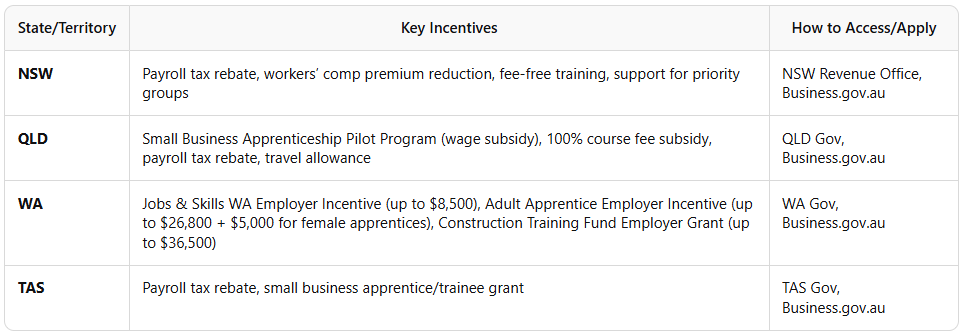
Key Finding:
Employers may be eligible for both Commonwealth and state/territory incentives for the same apprentice or trainee.
Special Incentives for Priority Groups
Women/Female Apprentices: Extra payments in WA and some other states for hiring female apprentices in construction and non-traditional roles.
Aboriginal and Torres Strait Islander Apprentices: Additional loadings and support in several states.
People with Disabilities: Wage subsidies and workplace modification support.
How to Access Incentives
National Programs: Apply via the Australian Apprenticeships Incentive System portal or through your Apprentice Connect Australia Provider.
State Programs: Apply through relevant state government websites or business.gov.au.
Eligibility: Check specific criteria for each program—sector, occupation, business size, and apprentice demographics all matter.
Employer Responsibilities and Compliance Considerations
As a small business owner, especially in 2026, compliance is non-negotiable.
Here’s what you need to keep top of mind:
Fair Work Act and Modern Awards
Wages: Apprentices must be paid at least the minimum rates set out in the relevant Modern Award or enterprise agreement.
Entitlements: Apprentices receive the same leave and conditions as other employees.
Termination: Follow correct procedures, especially after the probationary period.
New Criminal Penalties for Wage Underpayment (from 2025)
Intentional Underpayment: From 1 January 2025, intentional underpayment of wages is a criminal offence. Penalties are severe—ensure you use the Fair Work Ombudsman’s tools and seek advice if unsure.
Superannuation Changes (from 1 July 2026)
Super Payments: Super must be paid every payday, not quarterly. This applies to all employees, including apprentices.
Record-Keeping
Wages and Hours: Keep detailed records for at least seven years.
Training Records: Maintain evidence of training attendance and progress.
Contracts: Store all signed documents securely.
Other Legal Considerations
Workplace Health and Safety: Provide a safe, inclusive environment.
Discrimination and Harassment: Ensure your workplace is free from discrimination and harassment—this is especially important for female apprentices in male-dominated industries.
Tips for Managing an Apprentice Successfully as a Small Business
As a female business owner, you bring unique strengths to the table—empathy, adaptability, and a collaborative spirit.
Here’s how to make the most of your apprenticeship journey:
1. Set Clear Expectations
Outline roles, responsibilities, and performance standards from day one.
Use a structured onboarding process to help your apprentice settle in.
2. Foster a Supportive Culture
Encourage questions and learning.
Celebrate milestones and achievements.
Provide regular feedback—constructive and positive.
3. Leverage Mentoring and Networking
Connect your apprentice with industry mentors or networks.
Join women-in-business groups for support and shared learning.
4. Embrace Flexibility
Be open to flexible work arrangements, especially for school-based or mature-aged apprentices.
Adapt training and supervision to suit your business and the apprentice’s needs.
5. Stay Organised
Use digital tools for record-keeping and communication.
Schedule regular check-ins with your apprentice and RTO.
6. Access Support
Don’t hesitate to reach out to your Apprentice Connect Provider, RTO, or industry association for advice.
Tap into government resources and grants for female founders.

Conclusion: Take the Leap—Shape the Future
Offering an apprenticeship as a small business in Australia is more than just a recruitment strategy—it’s an investment in your business, your community, and the next generation of skilled professionals. As female entrepreneurs, we have the power to shape workplaces that are inclusive, innovative, and resilient.
In 2026, with government support at an all-time high and a renewed focus on skills and diversity, there has never been a better time to bring an apprentice into your business. You’ll gain a loyal team member, fresh perspectives, and the satisfaction of nurturing talent—while accessing financial incentives that make it a smart business move.
So, if you’ve been considering it, take the leap.
Reach out to your local Apprentice Connect Australia Provider, explore the incentives available, and start planning your apprenticeship journey today. Your future team—and your future self—will thank you.
Summary Box:
Apprenticeships are accessible, flexible, and well-supported in 2026.
Generous financial incentives are available for small businesses, especially those led by women.
Compliance is critical: Stay up to date with wage, super, and record-keeping obligations.
Support is available: Use government resources, networks, and mentoring to make your apprenticeship a success.
Useful Resources
You’ve got this!
As a female business owner, you’re already a trailblazer. By offering an apprenticeship, you’re not just building your business—you’re building Australia’s future.
There are many ways of working with professionals. Start small, but keep it regularly and don’t wait until something happens. Strategic planning and periodic reviews are a great start to implement those strategies.
Perfectly Organised NT can assist with a financial review and strategic business planning & management. Find out more!

Perfectly Organised NT - helping small business owners in Australia manage their business.